
Chemistry explained with 3D models
Atoms, bonds, molecules and laboratory tests: short explainers built around the 3D molecular models and experiments in ROQED Science.
Explainers
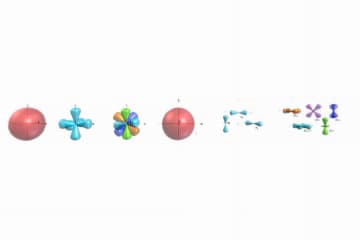
What are electron shells, subshells and orbitals?
Electron shells, subshells and orbitals are three nested levels of description for where the electrons of an atom are found: a shell is a main energy level, a subshell is a group of orbitals of the same type inside a shell, and an orbital is a region of space that holds at most two electrons.
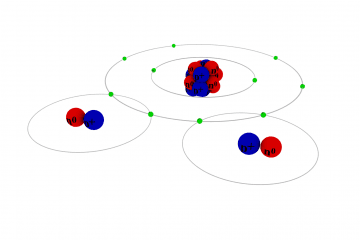
What is the difference between atoms and molecules?
An atom is the smallest particle of a chemical element that keeps its identity, while a molecule is a group of two or more atoms held together by chemical bonds that acts as a single particle.
More chemistry 3D models
- A number of metal activities
- Acetylene molecule
- Acids, Bases and pH
- Activation energy
- Activation Energy through the Distribution of Boltzmann
- Activation energy through the distribution of Maxwell-Boltzmann
- Acyl chlorides
- Air and air pollution
- Alcohols
- Aldehydes and ketones
- Alkali metals
- Alkaline earth metals
- Alkanes
- Alkenes
- Alkenes oxidation
- Allotropic modifications of carbon
- Amides
- Amines
- Amino acid molecule
- Ammonia molecule
- Atomic radius trends in a period
- Atomic structure
- Benzene
- Benzylpenicillin C 16 H 18 N 2 O 4 S
- Born-Haber cycle
- Borne-Gaber cycle
- Borne-Gaber cycle and hess law
- Buffer solutions
- Burning candles
- Caffeine
- Calcium oxide and copper oxide
- Calculations based on chemical equations
- Calculations for chemical equations
- Carbon cycle
- Carbon dioxide molecule
- Carbon NMR spectroscopy
- Carboxylic acids
- Catalysis
- Catalysts
- Chemical bonding
- Chemical equilibrium. Le Chatelier’s principle
- Chemical properties of acids
- Chemical properties of acids (limiting reagent)
- Chemical properties of alcohols
- Chemical properties of carboxylic acids
- Chemical properties of inorganic acids
- Chemical properties of oxides
- Chemical properties of transition elements
- Chemical reaction mechanism
- Chemical reaction rate
- Chemical reaction rate equation
- Chlorides of carboxylic acids (acylchlorides)
- Chromatography
- Combustion reaction
- Combustion reaction of simple substances
- Compilation of structural formulas of alkadiennes
- Compilation of structural formulas of alkanans (alkanes)
- Compilation of structural formulas of alkenes (alkenes)
- Complex ion colors
- Compound halogen